
A new insert is only as sound as the chimney it vents through, and most of that chimney is hidden. Before we fit any unit in Los Angeles we want three answers: will the flue take a liner, will the top of the chimney seal around it, and is the masonry fit to carry it for years. A camera inspection gives all three.
Which inspection the job calls for
The inspection levels come from NFPA 211, the standard most of the trade follows. The first is a look at what can be reached from the room and the roof with no tools. The second sends a camera up the inside of the flue and checks the hidden spaces the chimney passes, the attic included. The third involves taking something apart, a panel or some brick, and is kept for damage that is suspected but cannot be seen any other way.
Swapping an open fireplace for an insert changes what the chimney serves, and the standard ties that kind of change to the second level. So the visit before an insert is a Level 2, priced at $415. A Level 1 at $58 suits a chimney in steady use with nothing changing, but it cannot see the tiles an insert liner will pass.
What the camera looks for before an insert
Inside the flue, the camera records:
- cracked, shifted or missing clay tiles, and open joints between them;
- the size and shape of the flue, which sets the liner diameter and whether it will pass at all;
- bends in the chimney that a liner has to follow;
- deposits left by years of wood fires, which come out with a sweep before the fit;
- the throat and the old damper, where the liner starts its run.
What it looks for on top
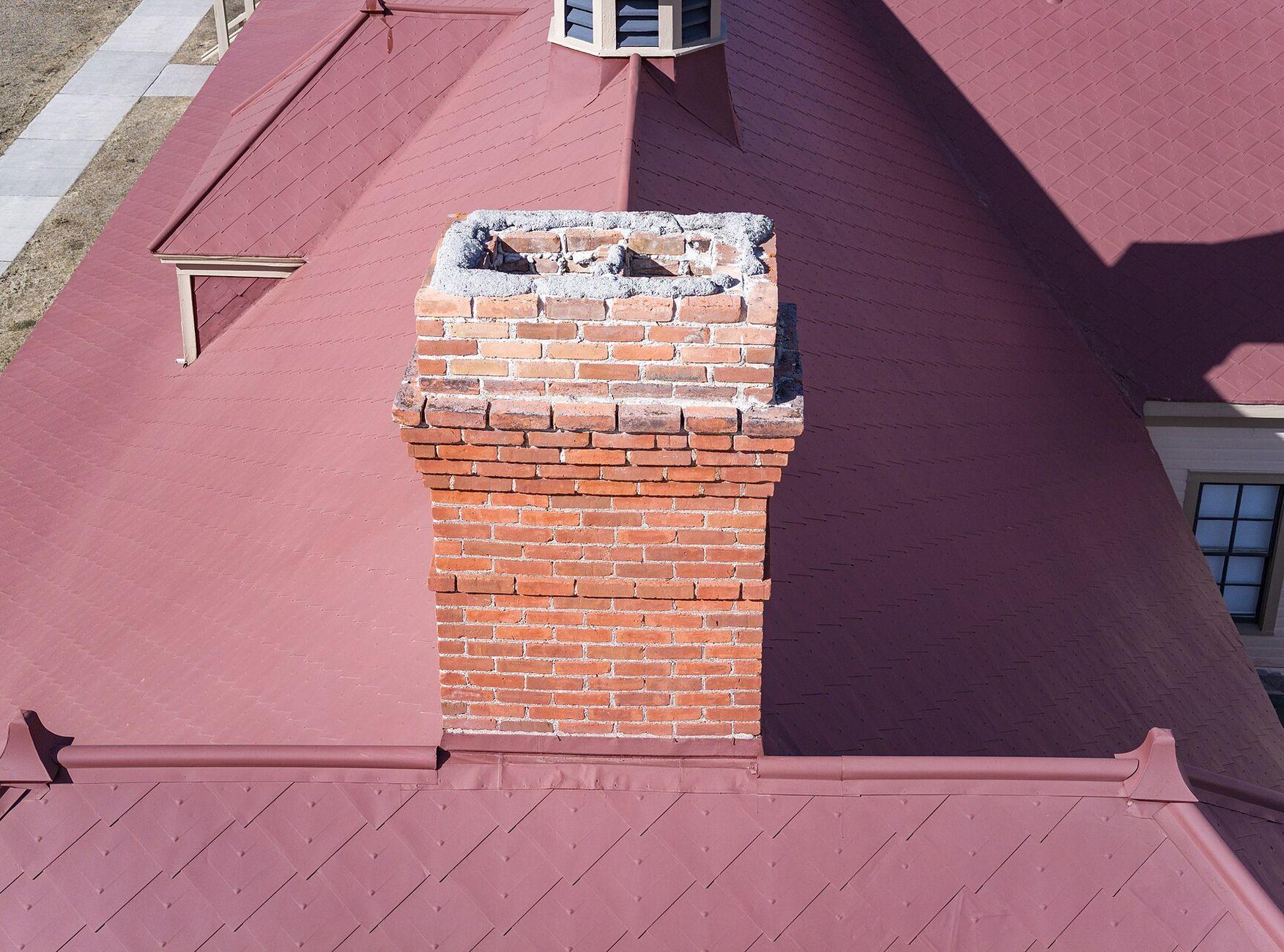
The roof end matters as much as the inside. The liner seals at the top, so whatever it seals to has to be whole. We record cracks in the crown, rust or a poor fit on the cap, loose units and open mortar in the brick above the roofline, and the state of the flashing where chimney meets roof. A crown with a crack running to the flue tile is a common reason an insert job grows a second line.
Quake history in Los Angeles
Plenty of brick chimneys here came through the shaking of 1987 and 1994 with cracks that were never repaired, often just above the roof where the stack has the least support. A liner does not mend a cracked stack. If the camera or the roof check finds that kind of damage, the repair or a seismic retrofit comes before the insert, and the report says which.
What the report hands the installer
Each finding gets a still from the video, where in the chimney it sits, and what it means for an insert: fit as found, fit after a sweep, fit after work at the top, or rethink the fuel. The report also records the flue size and the height from hearth to top, which the liner order depends on. Whoever fits the unit, us or someone else, can order from it.
Book the camera inspection and tell us which insert fuel you are weighing, so the report speaks to what that unit needs.
Rule 445 and wood inserts
Wood burning in Los Angeles County falls under Rule 445 of the South Coast air district. On winter days when the district forecasts poor air, wood fires are off; gas units are outside the rule. That bears on the inspection in one way: if a wood insert is meant to be your main heat, plan for evenings when it cannot be lit, and weigh gas or pellet alongside it. Pellet owners should read the current rule before buying, since it changes from time to time.
When the camera finds a problem
Most findings before an insert are ordinary: a sweep, a crown that needs patching, a cap that has rusted. Some change the job. A flue too narrow for the liner a large wood unit needs points to a smaller unit or to gas. Tiles broken in several places do not matter once a full liner runs past them, but they do if you meant to keep an open fireplace. A shared flue serving a furnace changes where the insert vent can go. Each of these is cheaper to learn about before a unit is ordered than after.
Booking it alone or with the fit
You can book the inspection by itself and take the report to any installer, or book it as the first part of an insert job with us. The price is the same $415 either way, and the findings are yours to keep. The Level 2 inspection page lists what the visit covers, and hiring someone to fit an insert covers what to expect from whoever does the work.
Questions about the pre-insert visit
Does a recent home inspection count? A general home inspection does not send a camera up the flue, so it rarely tells an installer enough.
Is a sweep needed first? If the flue has heavy deposits, yes, or the camera cannot see the tiles. From $445 on our price list.
Do gas inserts need the same inspection? Yes. The vent pipes still pass the full height of the old flue and seal at the top.
If an insert is on your list for this winter, start on the contact page and we will set up the camera visit first.
Weighing the Same Choice at Home?
Farrell Chimney Pros fits wood, gas and pellet inserts, gas log sets and liners, and handles the chimney work that has to come first. We visit homes in Los Angeles, Rosemead, South Pasadena, Downey and the cities around them.